Friday, May 26, 2006

White House knew enough about 9/11 to warn NY Times reporter

A senior White House official leaked intel about the impending 9/11 attack to New York Times reporter Judy Miller (one of the players in the outing of undercover CIA operative Valerie Plame) with enough specifics that on 9/11 she was able to think, "Crap, we should have run that story!"

While there is a legitimate question of whether running this story could have at least limited the damage by giving the people in New York a heads up so they would figure out exactly what was going on when the FIRST plane hit, the bigger question is why someone in the White House had enough information to pass on this warning to a reporter who took it seriously, but the highest levels of the Bush administration ignored the same information.

This story indicates that part of why this story may have been leaked was a desperate effort on the part of the leaker to force the administration to act, which of course they did not do in any meaningful way until the attack was nearly over.

There is a chance there may be another terrorist attack before Bush attacks Iran.
http://professorsmartass.blogspot.com/2006/02/how-and-why-bush-will-invade-iran.html

It's worth remembering that at the very least, the Bush people sat on their hands and let Americans die when it was convenient for their agenda.

KEY EXCERPTS:

AlterNet
The Burial of the 9/11 Story that Got Away
By Rory O'Connor, AlterNet
Posted on May 25, 2006
http://www.alternet.org/story/36651/

Last week, William Scott Malone and I broke the story of how a still anonymous, senior White House official leaked top-secret NSA intelligence in 2001 to then-New York Times reporter Judith Miller. The intelligence indicated that Al Qaeda was planning a major attack on the United States. But the "The 9/11 Story That Got Away" never made it into the paper.

It never made it to the attention of top Times executive Bill Keller either. Keller, now executive editor of the paper, was managing editor in July 2001. But he was kept in the dark when Miller's "impeccable" source first revealed details of highly classified signals intelligence (SIGINT) concerning an impending Al Qaeda attack, perhaps to be visited on the continental United States. The NSA had been listening in on a conversation between two members of Osama bin Laden's terror network. One was overheard saying to the other, "Don't worry, we're planning something so big now that the U.S. will have to respond."

****

Then there's the issue of leaks, when 'papers of record' like the Times are used as ammunition in Washington's endless bureaucratic "turf wars" that seem endemic to its peculiar nexus of media, politics and power. Miller's interview reveals much about how the game is played at the highest levels: "I got the sense that part of the reason that I was being told of what was going on was that the people in counter-terrorism were trying to get the word to the president or the senior officials through the press, because they were not able to get listened to themselves," she explained. "Sometimes, you wonder about why people tell you things and why people … we always wonder why people leak things, but that's a very common motivation in Washington."

****

Ultimately one can't help but wonder - if only… If only the Times had put something, anything, in the paper about the threat of an impending Al Qaeda attack "so big now that the U.S. will have to respond," perhaps the attack might have been averted. Or perhaps the people in the second World Trade Center tower would have known that the first plane to hit was a terrorist attack, and evacuated the building, saving hundreds of lives. Passengers on the hijacked planes that hit the WTC and the Pentagon might have reacted like those on United Flight 93.


FULL TEXT:

http://www.alternet.org/story/36651/


Thursday, May 25, 2006

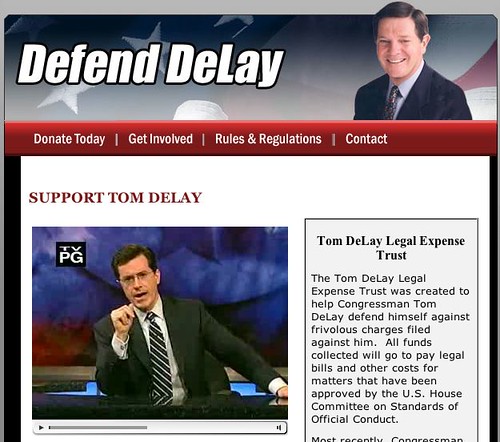
Stephen Colbert video used to defend GOP crook Delay

This is surreal. Tom Delay sent out an email using a Stephen Colbert interview to discredit a critic, even though Colbert is obviously doing a caricature of a right wing talk show host. Apparently, these guys didn't make it to the White House correspondents dinner to see Colbert rip Bush a new asshole as the same conservative toady character.


Delay's email:
http://thinkprogress.org/wp-content/uploads/2006/05/delay.JPG

Here's the video on Tom Delay's defense website:
http://www.defenddelay.com/site/c.fuIWLhMTJrE/b.1084881/k.BE08/Home.htm


The trailer for the movie Tom Delay is so worried about:
http://tomdelaymovie.com

This is a very short article, so I just bold-faced the gist.

FULL TEXT:

http://thinkprogress.org/2006/05/24/delay-colbert/


Desperate for Supporters, DeLay Turns to Stephen Colbert


A good sign that Tom DeLay doesn’t have the facts on his side: the top source for his latest defense against his critics is Stephen Colbert.

This morning, DeLay’s legal defense fund sent out a mass email criticizing the movie “The Big Buy: Tom DeLay’s Stolen Congress,” by “Outfoxed” creator Robert Greenwald.

The email features a “one-pager on the truth behind Liberal Hollywood’s the Big Buy,” and the lead item is Colbert’s interview with Greenwald on Comedy Central (where Colbert plays a faux-conservative, O’Reilly-esque character). The headline of the “fact sheet”:

DeLay thinks Colbert is so persuasive, he’s now featuring the full video of the interview at the top of the legal fund’s website. And why not? According to the email, Greenwald “crashed and burned” under the pressure of Colbert’s hard-hitting questions, like “Who hates America more, you or Michael Moore?”
Apparently the people at DeLay’s legal fund think that Colbert is actually a conservative. Or maybe they’re just that desperate for supporters.


public relations

Monday, May 22, 2006

Tolstoy on the good works of the rich

I have often thought that if the rich (or anyone) did their business ethically, looked after the welfare of their employees, bought from vendors who did the same and didn't pollute the environment, it would have a greater positive impact on society than all their public acts of charity. Tolstoy takes that idea a bit further.


I sit on a man's back, choking him, and making him carry me, and yet assure myself and others that I am very sorry for him and wish to ease his lot by any means possible, except getting off his back.

Leo Tolstoy,
Writings on Civil Disobedience and Nonviolence


Monday, May 08, 2006

For opposing NUKING IRAN,
Bush forced out BRITISH foreign secretary

To their credit, CBS News is covering this story, though it includes hedges that reduce to rumor what were more certain statements in the original Guardian piece.

For an action that the Bush administration claims is barely a remote possibility, nuking Iran, the Bushies are treating insider critics exactly like they did those in the run up to Iran War, just as they are doing the same diplomatic dance at the UN even though in the case of IraQ, the Downing Street Minutes of meetings with Bush before the war proved that was just a charade.

It seems likely that the Bush regime is coming to an end, and the prospect of a Bush clone succeeding him in the White House is at least as dim.

And yet Bush is not acting like a neutered lame duck. He continues to retaliate against political enemies, and threatened and browbeat friends and allies around the world, including asking Turkey to launch an invasion against Iran from there, just as they did before the Iraq War. War was a winner for both Bush and GOP in 2002 & 2004, Pentagon insiders have said the Bushies has a list of countries they would like to invade, and Iran has been on the neoconservative hit list since before Bush came into power.

How will the Bushies justify invading IraN when their 9/11 & WMD scare tactics are growing thin? Someone at the Pentagon leaked an order they got from Cheney to the American Conservative magazine last summer that had these elements:

1) terrorist attack here

2) air strikes on Iran with conventional and tactical nukes

3) air strikes will be done REGARDLESS of whether Iran is involved in the terrorist act.
http://www.amconmag.com/2005a/2005_08_01/article3.html

At the time, no one paid attention to the story because it would be insane to start a war with a bigger country when we are loser with a smaller one. It would still be insane, but the Bushies are moving toward it anyway.

It is possible that the CIA or Pentagon will throw a wrench in this scam that Pentagon wargaming indicated would spin out of control and escalate to a world war, or an even more distant possibility that used to happen back in the mists of history, Congress would exercise it's power to investigate, control the purse strings, and decide whether to declare war or NOT declare war.

Right now, it's more likely that the CIA or Pentagon will rebel, or even that the flying monkeys from the Wizard of Oz will take their kinsman Bush back to the Organ Grinder for retraining.

KEY EXCERPTS:


Did Bush Force British Minister Out?

May 7, 2006

(CBS/AP) The Independent suggests that a phone call from the U.S. president to British Prime Minister Tony Blair led to the removal of Foreign Secretary Jack Straw Friday. [ A UK Guardian story is a little stronger than "suggests" http://www.guardian.co.uk/guardianpolitics/story/0,,1768840,00.html ]

The newspaper reports that friends of Straw believe Mr. Bush was extremely upset when Straw pronounced any use of nuclear weapons against Iran "nuts." [the parallel case of the previous foreign secretary has more evidence than a "belief," neocons complained about Robin Cook even before the election because of his criticism of US foreign policy http://www.guardian.co.uk/comment/story/0,,1769722,00.html]

*****

The foreign secretary's reservations about invading Iraq featured prominently in the Downing Street memos, written in 2002 and leaked last year.

Straw wrote in a memo to Blair that he would have a tough time convincing the Labour Party that a pre-emptive strike against Iraq was legal under international law.

"We have also to answer the big question: what will this action achieve?" he wrote. "There seems to be a larger hole in this than on anything."


FULL TEXT:

http://www.cbsnews.com/stories/2006/05/07/politics/printable1596108.shtml


Wednesday, May 03, 2006

Gen. Odom on why we should pull out of Iraq fast

Lately, only retired generals are willing to speak honestly about Iraq in stark contrast to the blind cheerleading of most republicans and the evasion, equivocation, and me-tooism of most Democrats.

He also offers a more realistic and fact-based assessment of Iran compared to drumbeat for war of the administration.

I would only add a couple of things where he didn't go quite far enough:

Our presence in Iraq incites terrorism and gives recruiters for terrorists a recruiting tool. Israel and Saudi studied debriefings of captured foreign fighters in Iraq and found that most were motivated not by radical Islam but outrage at seeing what has been done to the Iraqi people. LINK

His point on the Iraqi troops likewise doesn't go quite far enough. We pretend they aren't standing up because of them being too dense or cowardly to absorb our training, as if Iraqis are apes who just descended from the trees. But the reality is they are hesitant because they are fighting for us against their own people. Many if not most showed up for the paycheck so they can feed their families, but there are limits to what people will do for money.

The biggest element he left out though is that the Iraqis do not believe we are there to look out for their interests or spread democracy however much Americans think or wish that's what we are doing. The Bush administration went in with a plan to privatize and sell off everything possible, and even pumped oil unmetered after we first invaded. Most Americans don't know that, but it's harder to miss when it's right in front of your face.

This war has nothing to do with preventing terrorism--it is creating it by pursuing private gain for oil, defense, and rebuilding corporations on our tax dime (or rather 10 trillion dimes) and with our troops and Iraqis lives.

KEY EXCERPTS:


http://blog.foreignpolicy.com/odom/odom.html

Cut and Run? You Bet.

By Lt. Gen. William E. Odom

Withdrawal will encourage the terrorists. True, but that is the price we are doomed to pay. Our continued occupation of Iraq also encourages the killers—precisely because our invasion made Iraq safe for them. Our occupation also left the surviving Baathists with one choice: Surrender, or ally with al Qaeda. They chose the latter. Staying the course will not change this fact. Pulling out will most likely result in Sunni groups’ turning against al Qaeda and its sympathizers, driving them out of Iraq entirely.

Before U.S. forces stand down, Iraqi security forces must stand up. The problem in Iraq is not military competency; it is political consolidation. Iraq has a large officer corps with plenty of combat experience from the Iran-Iraq war. Moktada al-Sadr’s Shiite militia fights well today without U.S. advisors, as do Kurdish pesh merga units. The problem is loyalty. To whom can officers and troops afford to give their loyalty? The political camps in Iraq are still shifting. So every Iraqi soldier and officer today risks choosing the wrong side. As a result, most choose to retain as much latitude as possible to switch allegiances. All the U.S. military trainers in the world cannot remove that reality. But political consolidation will. It should by now be clear that political power can only be established via Iraqi guns and civil war, not through elections or U.S. colonialism by ventriloquism.

Setting a withdrawal deadline will damage the morale of U.S. troops.
Hiding behind the argument of troop morale shows no willingness to accept the responsibilities of command. The truth is, most wars would stop early if soldiers had the choice of whether or not to continue. This is certainly true in Iraq, where a withdrawal is likely to raise morale among U.S. forces. A recent Zogby poll suggests that most U.S. troops would welcome an early withdrawal deadline But the strategic question of how to extract the United States from the Iraq disaster is not a matter to be decided by soldiers. Carl von Clausewitz spoke of two kinds of courage: first, bravery in the face of mortal danger; second, the willingness to accept personal responsibility for command decisions. The former is expected of the troops. The latter must be demanded of high-level commanders, including the president.

Two facts, however painful, must be recognized, or we will remain perilously confused in Iraq. First, invading Iraq was not in the interests of the United States. It was in the interests of Iran and al Qaeda. For Iran, it avenged a grudge against Saddam for his invasion of the country in 1980. For al Qaeda, it made it easier to kill Americans. Second, the war has paralyzed the United States in the world diplomatically and strategically. Although relations with Europe show signs of marginal improvement, the trans-Atlantic alliance still may not survive the war. Only with a rapid withdrawal from Iraq will Washington regain diplomatic and military mobility. Tied down like Gulliver in the sands of Mesopotamia, we simply cannot attract the diplomatic and military cooperation necessary to win the real battle against terror. Getting out of Iraq is the precondition for any improvement.

In fact, getting out now may be our only chance to set things right in Iraq. For starters, if we withdraw, European politicians would be more likely to cooperate with us in a strategy for stabilizing the greater Middle East. Following a withdrawal, all the countries bordering Iraq would likely respond favorably to an offer to help stabilize the situation. The most important of these would be Iran. It dislikes al Qaeda as much as we do. It wants regional stability as much as we do. It wants to produce more oil and gas and sell it. If its leaders really want nuclear weapons, we cannot stop them. But we can engage them.

Lt. Gen. William E. Odom (Ret.) is senior fellow at the Hudson Institute and professor at Yale University. He was director of the National Security Agency from 1985 to 1988.


FULL TEXT:
http://blog.foreignpolicy.com/odom/odom.html


public relations

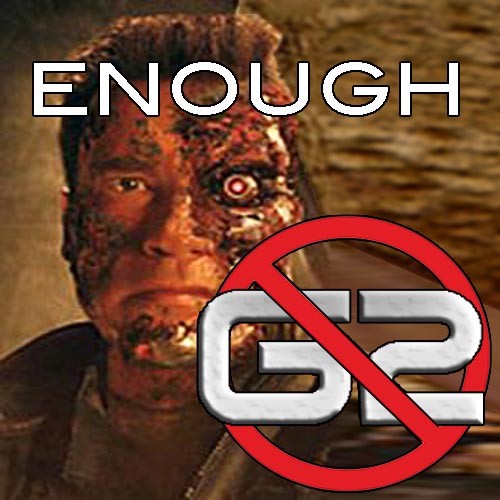
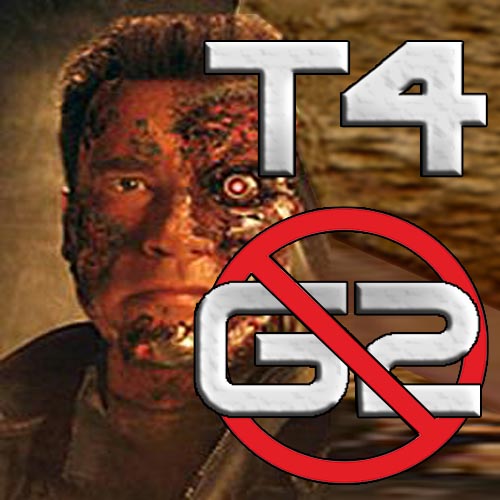
ARNOLD: T4 NOT G2


Save California while you can...

Click to see full sized


Monday, May 01, 2006

The Key to Iraq and future oil wars:
The Prize by Daniel Yergin

I often refer to this book in conversation when I try to explain how pivotal oil is to our foreign policy and wars.

It got a Pulitzer Prize and the author is such a lefty that he went to work with Papa Bush at the Carlyle Group, and went on to right a book on the success of unrestricted free markets after World War II.

I just found an excellent summary at Wikipedia.

The section that are most useful are on World War II, FDR & the Saudis, and the coup in Iran in the 1950s. That last one set off the chain of events that lead to theocracy in power there today.

SOME EXCERPTS:

WORLD WAR II

Ch. 16: Japan’s Road to War

Japan occupies Manchuria, 1931 (305). Ultranationalist militarists in power (306). Japan dependent on foreign oil, especially Rising Sun (Japanese affiliate of Royal Dutch/Shell) and Standard-Vacuum (Stanvac, an amalgam of Jersey and Standard of New York’s Far East operations) (307). 1934 Petroleum Industry Law squeezed companies (308). Japan attacks China, 1937; placates companies as U.S. public opinion sides with China (308-10). Stanvac resolved on embargo of Japan if U.S. so decides (310-11). U.S. moves fleet to Pearl Harbor and restricts (but does not stop) oil shipments to Japan, 1940 (311-13). Cordell Hull & Admiral Nomura converse repeatedly (313-14). Admiral Yamamoto sensitive to Japan’s oil predicament (314-16). Japan invades Indochina; U.S. effectively embargoes oil, July 1941 (316-19). P.M. Konoye-Roosevelt summit doesn’t come off (319-20). Japanese resolve on war (320-23). Operation Hawaii’s primary target is East Indian oilfields (325-26). Japanese err in failing to destroy 4,500,000 barrels (720,000 m³) of vulnerable U.S. oil supplies at Pearl Harbor (326-27).


Ch. 17: Germany’s Formula for War

IG Farben’s research on synthetic fuels (1913 Bergius process of hydrogenation) leads to an alliance with Standard of Jersey (328-31). Nazified IG Farben’s synthetic fuels produce 46% of Germany’s oil in 1940 (332-33). Blitzkrieg and oil scarcity (333-34). Oil and Hitler’s invasion of Russia (334-36). Operation Blau, to seize oil of the Caucasus: ironically, “the Germans ran short of oil in their quest for oil”; “the blitzkrieg phase was over” (336-39). Rommel’s contempt for “the quartermaster’s advice" controverted by failure in North Africa (339-43). Speer’s reorganized German economy depends on synthetic fuels made by slave labor, e.g. at Auschwitz (343-46; 817). Beginning in May 1944, Allied air attacks on synthetic fuel plants and other oil facilities are a “fatal blow” (Gen. Adolph Galland) (346-48). Battle of the Bulge: Col. Jochem Peiper’s panzer unit almost seizes Stavelot fuel supply’s 2.5m gallons of fuel (348-49). No fuel left in war’s last months (349-50).


Ch. 18: Japan’s Achilles’ Heel

Jan. 20, 1942: Shell manager H.C. Jansen destroys Balikpapan (Borneo) oil-refining center (351-54). MacArthur & Nimitz (355). Strategy: safeguard supply lines and block “Japan’s indispensable ‘oil line’” (355). U.S. victories at Midway and Guadalcanal, but Japanese succeed in gaining oil supply (355-57). Submarine warfare decisive against Japanese shipping; synthetic fuel effort fails (357-58). Fuel shortages impact Japanese conduct of war (359-62). Yamato sinking on April 7, 1945 is “the end of the Imperial Navy” (362-63). Final desperate moves: pine root campaign; overtures to Soviets; national suicide (363-66). MacArthur’s motorcade and Tojo’s ambulance (366-67).


FDR & SAUDIS

Ch. 20: The New Center of Gravity

Everette Lee DeGolyer’s late 1943 mission to Saudi Arabia concludes: “The oil in this region is the greatest single prize in all history” (words of someone named Leavall) (391-93). U.S. policymakers focus on Mideast oil (395-96). 1943-1944: U.S. contemplates owning Mideast oil and pipeline businesses (396-99). Anglo-American tensions in 1943-1944 over Mideast oil (399-402). Anglo-American Petroleum Agreement (1944) fails due to Senate opposition (402-03). February 13, 1945: Roosevelt talks with Ibn Saud for five hours aboard the USS Quincy on the Great Bitter Lake of the Suez Canal (403-05). After FDR’s death, attempts to revive the Anglo-American Petroleum Agreement come to naught (405-08).


COUP IN IRAN

Ch. 23: “Old Mossy” and the Struggle for Iran

Mohammed Reza Pahlavi takes deposed father’s throne in Iran, 1941 (450-51). Iranian hatred of British (451-52). Under pressure, Sir William Fraser’s Anglo-Iranian tries to renegotiate agreement, but Iran under Mossadegh nationalizes oil industry (452-56). Portrait of Mossadegh as sly lunatic (456-58). Plan Y, for British military intervention (458). Dean Acheson sends Averill Harriman to negotiate; British send Richard Stokes; Mossadegh intractable (459-62). British abandon Abadan refinery, October 4, 1951 (462-63). Attempts at settlement unavailing; Mossadegh grows demagogic (463-67). Operation Ajax overthrows Mossadegh, described as a “countercoup,” August 1953 (467-70). U.S. govt. prods American companies to come to the rescue in Iran (470-71). Justice Dept. pursues criminal case with 1949 analysis entitled The International Petroleum Cartel, but Truman and Eisenhower reduced case to civil matter (472-75). Iranian consortium established: “The United States was now the major player in the oil, and the volatile politics, of the Middle East” (475-78)


FULL TEXT:

Wikipedia on The Prize: The Epic Quest for Oil, Money, and Power

Yergin does a good job of referring to primary documents, and this used to be more openly discussed until at least the first Gulf War when Papa Bush discovered people didn't care enough about oil to send our troops to die for it--so we get all the nonsense about Saddam being worse than Hitler as if they didn't know what a bastard he was when we were selling him weapons and encouraging him to fight Iran.


Tuesday, April 25, 2006

ON IRAQ: The Bush Agenda: Invading the World, One Economy at a Time

This stuff should be front page news, and even though it isn't, people are figuring it out, and demanding windfall profits taxes on oil companies that use our tax dollars and troops to expand their assets and repay us by raising gas prices and giving their execs $400 million parting gifts.

Others like Greg Palast and Naomi Klein have done a good job of covering this, but the story has yet to become part of the mainstream discussion, not even among Democrats and some progressive talk shows like Al Franken, on why we are in Iraq, and if and how we need to leave.

I suspect that why it isn't discussed is that if it was, it would be game over in public opinion since the motive is not access for American consumers and our economy (the Middle East would sell to their biggest consumer no matter what), but access for American oil companies, so they can reap the profits and determine the price and flow.

Two different stories, one from the top CIA oil analyst and another from the minutes of a meeting between Tony Blair and W, indicate Bush invade to keep Saddam from pumping too much oil when the sanction came off and driving price down--we invaded for the privilege of paying MORE for gas.

http://professorsmartass.blogspot.com/2006/04/new-dsm-bush-told-putin-iraq-war.html


The title includes another under-reported aspect of the Iraq War story--that it is a more overt version of what we do on behalf of business in other countries. You can have any kind of government you wants as long as it does drive too hard a bargain for its natural resources, pay it's workers too much, or spend too much on social services like education and medical care (which might require taxing businesses). This system works well for business, but not the rest of us. It's why essentially every country in South America have elected anti-American governments because people are outraged at this economic foreign policy that few Americans have even heard of, neoliberalism, that sounds nice but works in the ugly way I just described.

It also sounds remarkably like what the Bush administration is doing to the US, and gradually getting the same results in public outrage.

A good brief summary of neoliberalism:
http://www.corpwatch.org/article.php?id=376

How "economic hit men" set it up and enforce it:
http://www.johnperkins.org/Preface.htm


The Bush Agenda: Invading the World, One Economy at a Time author's website:

http://www.bushagenda.net/index.php


Greg Palast's timeline of Iraq oil meeings (with video interviews with the players):

http://www.gregpalast.com/iraqmeetingstimeline.html

Detailed report on restructuring of Iraq's oil industry to benefit our oil companies:

http://www.globalpolicy.org/security/oil/2005/crudedesigns.htm


Colin Powell's chief of staff on oil motive for Iraq War:

http://professorsmartass.blogspot.com/2005/11/powell-aide-says-war-about-oil-so-we.html


Broader background on oil, war, and foreign policy:
http://www.mymethow.com/~joereid/oil_coup.html

Naomi Klein on privatization and its effects in Iraq:
http://www.harpers.org/BaghdadYearZero.html


Economic war crimes in Geneva and Hague Conventions:

The Hague Convention of 1907 (IV) see articles 47, 53, 55
http://www.icrc.org/ihl.nsf/FULL/195?OpenDocument

The Geneva Convention of 1949 (IV) we've broken almost every section of article 147, and Bush has personally broken article 148.
http://www.icrc.org/ihl.nsf/FULL/380?OpenDocument


KEY EXCERPTS:


http://www.democracynow.org/article.pl?sid=06/04/25/1343214

Tuesday, April 25th, 2006

Antonia Juhasz on The Bush Agenda: Invading the World, One Economy at a Time

WHO PLANNED THE WAR:


Chevron has seen its most profitable years in its entire 125-year history over the last two years. They are making out like bandits. They have been at the forefront of advocating for decades for increased U.S. economic access to Iraq. And now, they are one of the few companies that are poised once the new oil law is implemented. And that oil law has its history in the U.S. State Department, in the Iraqi Oil and Energy Working Group that formed right before the war.

... At the end of Saddam Hussein's tenure, he had signed about 30 contracts with companies from all around the world to give them access to Iraq's oil sector. None of those contracts were with the United States or U.S. oil companies. The Cheney Energy Task Force, that met at the very beginning of the Bush administration, mapped out foreign suitors to Iraqi oil, listed all of the companies, all of the countries, the fields that they had access to, within a document that said we need --the U.S. needs to get greater access to Middle East oil. [Mike's note: this task force met before 9/11]

AMY GOODMAN: Can you tell us who Cheney met with?

ANTONIA JUHASZ: Cheney met with -- thank goodness for the Supreme Court, that ruled to release these documents, because otherwise they were completely secret. He met with Bechtel, Chevron, Halliburton, Exxon, all of the largest oil companies and all of the largest oil engineering companies, and they decided we need to increase our access to Middle Eastern oil.


****

ANTONIA JUHASZ: Bremer became the dictator of Iraq. His orders laid out the law. Now, probably the most important thing to know is that that was completely illegal under international law. The Geneva Conventions are very specific about what an occupying power should do. It must provide basic security and services. It cannot change the laws or the political structure of the country it occupies. The Bush administration did exactly the opposite -- changed all the fundamental economic and political laws and utterly failed to provide for the security and the basic needs of the Iraqi people. What you hear most often in Iraq today is people saying, “Please just put us back where we were before you came.”

****

OIL PROFITS, PRICE @ THE PUMP, & BUSHIES

AMY GOODMAN: We’re talking to Antonia Juhasz, author and activist, wrote The Bush Agenda: Invading the World, One Economy at a Time. Now, gas is over $3 in many places. What's the connection?

ANTONIA JUHASZ: Well, here's the connection. The Bush administration is the most beholden administration probably in American history to the oil and gas industry. This is the first time in history that the President, Vice President and Secretary of State are all former energy company officials. In fact, both Bush and Rice have more experience as energy company officials than they do as government leaders. Cheney outbeats them. He’s spent 30 years working for government. However, his five years at Halliburton have been so profitable that you might say that his Halliburton years outweigh their oil years, because Bush was a very bad oil company executive. But their links to the oil sector are deep.

The oil industry provided more than 13 times more money to the Bush-Cheney ticket in the first round of elections than it did to his competitor, nine times more in the second. And this industry has been absolutely coddled by the Bush administration: enormous tax subsidies, deregulation, and, I would argue, a war waged on their behalf.

****

AMY GOODMAN: In your chapter "A Mutual Seduction," you have a quote of Ken Derr, the former C.E.O. of Chevron, 1998. I know his tenure well. It was the time in the Niger Delta that Chevron was involved with the killing of two Nigerian villagers, who were protesting yet another oil spill of Chevron and jobs not being given to the local community as they drilled for oil. But your quote here says, “Iraq possesses huge reserves of oil and gas, reserves I would love Chevron to have access to.” And then you follow that by a quote of John Gibson, Chief Executive of Halliburton Energy Service Group, who says, “We hope Iraq will be the first domino and that Libya and Iran will follow. We don't like being kept out of markets, because it gives our competitors an unfair advantage.”

ANTONIA JUHASZ: I love it when they’re honest. It doesn’t happen very often. Yeah, these companies have been explicit, for decades, that they want in, particularly to Iraq. The reason is obvious. Iraq certainly has the second largest oil reserves in the world, but some geologists believe it has the largest, at least on par with Saudi Arabia. That's a tremendous pool of wealth. And not just have the companies been clear that they want access to that oil, U.S. leaders -- for example, Dick Cheney, Paul Wolfowitz, Zalmay Khalilzad, Donald Rumsfeld -- have all been explicit for the past 20 years that what the U.S. needs to do is gain increased access to the region's oil, and most explicitly during the ‘90s, Iraq's oil, that this is something that shouldn’t be in the hands of Saddam Hussein.

The difference, going into the current Bush administration, was that the rhetoric changed to and the reality changed to not just we need a new leader, we need a new -- a fully new political and economic structure in Iraq, and we need to be in that country to make sure that that structure gets put into place. And that is exactly what they have achieved, and now Halliburton, Chevron, Bechtel, Lockheed Martin have profited tremendously from this process already. Chevron’s -- the U.S. value of Iraqi oil, imported Iraqi oil, has increased by 86% between 2003 and 2004. Those profits have gone to Exxon, Chevron and Marathon.

http://www.democracynow.org/article.pl?sid=06/04/25/1343214


Thursday, April 13, 2006

LBJ commercial on NUKE happy conservatives

(CLICK TO PLAY)


The current talk of using nuclear bunker busters in Iran reminded me of this commercial from the 1964 presidential race, when LBJ was running against uber-hawk Goldwater.

Rather than hollow me-tooism, this is how LBJ framed those eager to use our nuclear arsenal.

http://www.pbs.org/30secondcandidate/timeline/years/196...

Another on nukes,

MERELY ANOTHER WEAPON?

Some of the outside groups might have done stuff this good, but most of the candidates including Kerry seemed to be in a contest to see whose commercials could be more bland, inoffensive, and forgetable.

People still talk about this one. What the hell happened? Are all the current Democratic consultants fifth columnists or retarded?


More LBJ commercials:

http://www.pbs.org/30secondcandidate/timeline/years/1964b.html


public relations

Saturday, April 08, 2006

Letter on Bush plans to NUKE IRAN

To my elected representatives in Congress:


April 8, 2006

Rep. Waxman & Sen. Boxer & Feinstein,

Seymour Hersh, the Pulitzer Prize winning journalist at the New Yorker, is reporting that the Bush administration is planning pre-emptive air strikes on Iran’s nuclear facilities.

Whatever Iran’s nuclear ambitions are, or weapons they have, they are not and will not be a threat to us given our arsenal of 10,000 nuclear warheads. It is nearly as unlikely that they would strike Israel given their arsenal of 200 or more and our close relationship with them. Anyone smart enough to gain political power in any country would remember MAD, mutually assured destruction, from the Cold War, and would know that the calculus would be even worse for anyone who used a nuke on us or gave a nuke to a terrorist group that used it on us—the country that did that would know he may harm us, but before the mushroom cloud cleared here, his country would no longer exist.

Last summer, Russia, China, and several former Soviet republics asked us when we were going to finish up our military operations in Asia and leave. I doubt that they would sit idly by while we invade another major oil producing country, effectively controlling the spigot for the whole world.

Before the Iraq War, in addition to the embarrassing, childish lies about ties to 9/11, WMD, and spreading democracy, a quieter argument was made that controlling Iraq’s oil was a way to break the back of OPEC, and lower the price of oil. Now BBC journalist Greg Palast has received State Department documents that indicate the purpose was to prop up the price of oil and keep Saddam from pumping more when the sanctions came off. This was verified in a portion of one of the Downing Street Memos recently that said Bush sent reassurances to Russia’s Putin that our invasion of Iraq would NOT drive down the price of oil.

So it appears that even that figleaf of a national security argument is a lie. We killed over a hundred thousand Iraqis and wasted the lives of our soldiers to pad the profits of oil companies, the defense industry, and a handful of other corporations.

America should not have to sacrifice so much of our blood and tax dollars so that so very, very few can profit.

As an elected representative of the people of California, you must do whatever you can to stop this. A good start would be telling America plainly why we invaded Iraq in the first place without referring to the insulting PR firm lies the Bush administration has fed us. Jack Murtha has done an admirable job telling us the truth about what’s going on in Iraq today. Now we need a Murtha to tell us how we got there.

You must stop Bush from attacking Iran.

Sincerely,


>

Friday, April 07, 2006

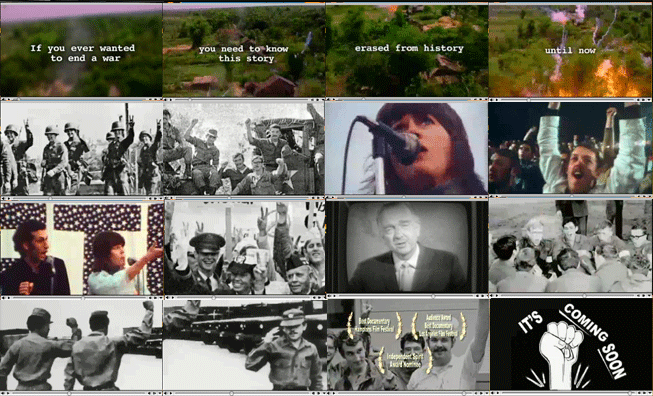
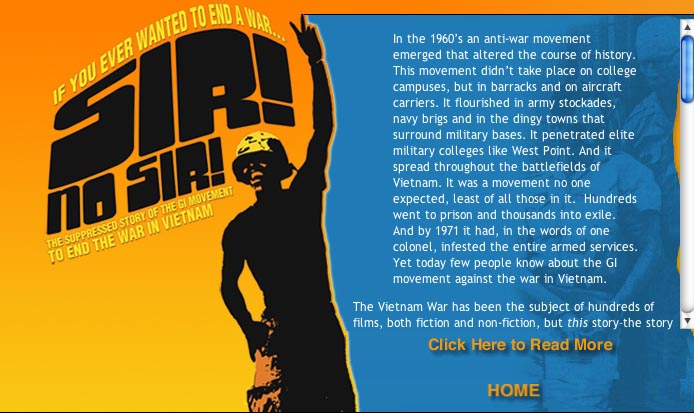
NEW DOCUMENTARY: troops rebelled to end Vietnam War

You have got to see this trailer and see the documentary when it comes to your town.

It is funny that the accepted history is that war protesters were hippies who spit on veterans (which has turned out to be an urban legend or disinformation), and the stories like Ron Kovic of Born on the Fourth of July and John Kerry's Winter Soldiers are seen as an anomaly, footnote, or left out all together. In fact, there was a pretty widespread rebellion in the military against the war, this clip shows Walter Cronkite acknowledging it, and Jane Fonda doing a skit on it in front of thousands of troops who applaud:

Fonda played the part of an aide to President Richard Nixon.

"Richard," she exclaims. "There's a terrible demonstration going on outside."

Nixon replies: "Oh, there's always a demonstration going on outside."

Fonda: "But Richard. This one is completely out of control. They're storming the White House."

"Oh, I think I better call out the 3rd Marines." Nixon exclaims.

"You, can't, Richard," says Fonda.

"Why not?" says Nixon.

She answers: "Because they ARE the 3rd Marines!"

From Alternet article on history of the military rebellion:

http://www.alternet.org/movies/34532


THE STORY:


http://www.sirnosir.com/home_about_film.html

TRAILER:

http://www.sirnosir.com/home_filmtrailers.html


Tuesday, April 04, 2006

New DSM: Bush told Putin Iraq War wouldn't cut OIL price

The Nation got a hold of a previously unreleased portion of one of the Downing Street Memos.

This one seems to confirm Greg Palast's recent column that said the goal of the war was to constrict not expand the flow of oil.

Bush assures Putin the price won't collapse, which means he was either lying or knew that the oil companies had no intention of opening the spigot wider once they got control of it.

If this turns out to be true, it destroys the last figleaf of a possibly defendable reason for invading Iraq--to secure oil for our economy.

This makes the war look like a variation of the no-bid contracts given to Halliburton, but in this case, the gift is the oil rights in Iraq, and like the Halliburton contracts, we get to pay for it.


KEY EXCERPTS:


BLOG | Posted 04/03/2006 @ 11:58am

Bush's Prewar Putin Strategy


David Corn

It was January 31, 2003. George W. Bush was moving toward war in Iraq, and he was meeting with British Prime Minister Tony Blair in the Oval Office to discuss various war-related matters. Last week, The New York Times disclosed portions of a secret memo--written by Blair's senior foreign policy adviser, David Manning--that summarized what the two leaders covered at this session, which Manning also attended. Blair, according to the memo, wanted Bush to fight for a United Nations Security Council resolution authorizing military action against Saddam Hussein. Bush agreed to try for such a resolution, but he told Blair that the start date for the war, win or lose at the UN, would be March 10. Bush also proposed provoking a confrontation with Saddam's regime that would justify attacking Iraq. The pair chatted about postwar Iraq, agreeing that sectarian violence was unlikely.

And according to a previously undisclosed portion of this memo--a passage obtained by The Nation--Bush and Blair discussed what to do about Russian President Vladimir Putin, who was opposed to a war in Iraq. Bush told Blair he had come up with a possible solution: send Italian Prime Minister Silvio Berlusconi to lecture Putin on free-market economics.

***

During his White House meeting with Berlusconi, Bush tapped the Italian to win over Putin by teaching him about fundamental economics. The Manning memo--according to sources who reviewed parts of the document and took notes--records how Bush described this idea to Blair the next day:
For Putin, the problem was oil. He had convinced himself, quite wrongly, that military action against Iraq would lead to the collapse of the oil price. Bush had encouraged Berlusconi to go and explain a thing or two to Putin about the laws of supply and demand.
Did Bush truly believe that oil was Putin's primary concern--not, say, American unilateralism--and that a lecture from Berlusconi on economics would turn around the Russian leader? How did Berlusconi react to Bush's suggestion? How did Blair respond to this "explain a thing or two" strategy? The memo says nothing else about this part of the Bush-Blair conversation.

FULL TEXT:

http://www.thenation.com/blogs/capitalgames?bid=3&pid=7...


public relations

US thinks first strike on Russia & China winnable (and Russia Reacts)

One reason the Cold War was relatively cold and our fights with China and Russia were relatively small wars and half of those were through proxies was because of Mutually Assured Destruction (MAD), the understanding that if either side used nukes it would escalate to the point that both sides would be completely destroyed, and therefore could never be done.

Now that has changed.

Foreign Affairs, the Journal of the Council on Foreign Relations, the premier bipartisan foreign policy think thank, now says that the US could soon completely destroy Russia or China's nuclear arsenals in a first strike.

Ironically, part of why Russia's nuclear stockpile is dwindling is we have been buying and destroying their warheads to keep them from falling into the hands of terrorists, Third World countries, or just going off in their silos. Russia may think twice about cooperating with that program after this.

Here's a snapshot of the Russian response from the Washington Post:

"The publication of these ideas in a respectable American journal has had an explosive effect," former Russian prime minister Yegor Gaidar wrote in an article in London's Financial Times newspaper. "Even those Russian journalists and analysts who are not prone to hysteria or anti-Americanism took it as an outline of the official position of the U.S. Administration."

"Today, it's accepted by most of the establishment that we are under pressure, that we are being surrounded, and it's leading to a defensive nationalist vision," said Sergei Rogov, director of the Institute of the United States and Canada in Moscow.

Maybe it's time to put some people in charge of our government who don't see nuclear war as pursuing their business interests by other means.


KEY EXCERPTS:

The Rise of U.S. Nuclear Primacy
By Keir A. Lieber and Daryl G. Press

From Foreign Affairs, March/April 2006

During the Cold War, many scholars and policy analysts believed that MAD made the world relatively stable and peaceful because it induced great caution in international politics, discouraged the use of nuclear threats to resolve disputes, and generally restrained the superpowers' behavior. (Revealingly, the last intense nuclear standoff, the 1962 Cuban missile crisis, occurred at the dawn of the era of MAD.) Because of the nuclear stalemate, the optimists argued, the era of intentional great-power wars had ended. Critics of MAD, however, argued that it prevented not great-power war but the rolling back of the power and influence of a dangerously expansionist and totalitarian Soviet Union. From that perspective, MAD prolonged the life of an evil empire.

This debate may now seem like ancient history, but it is actually more relevant than ever -- because the age of MAD is nearing an end. Today, for the first time in almost 50 years, the United States stands on the verge of attaining nuclear primacy. It will probably soon be possible for the United States to destroy the long-range nuclear arsenals of Russia or China with a first strike. This dramatic shift in the nuclear balance of power stems from a series of improvements in the United States' nuclear systems, the precipitous decline of Russia's arsenal, and the glacial pace of modernization of China's nuclear forces. Unless Washington's policies change or Moscow and Beijing take steps to increase the size and readiness of their forces, Russia and China -- and the rest of the world -- will live in the shadow of U.S. nuclear primacy for many years to come.

One's views on the implications of this change will depend on one's theoretical perspective. Hawks, who believe that the United States is a benevolent force in the world, will welcome the new nuclear era because they trust that U.S. dominance in both conventional and nuclear weapons will help deter aggression by other countries. For example, as U.S. nuclear primacy grows, China's leaders may act more cautiously on issues such as Taiwan, realizing that their vulnerable nuclear forces will not deter U.S. intervention -- and that Chinese nuclear threats could invite a U.S. strike on Beijing's arsenal. But doves, who oppose using nuclear threats to coerce other states and fear an emboldened and unconstrained United States, will worry. Nuclear primacy might lure Washington into more aggressive behavior, they argue, especially when combined with U.S. dominance in so many other dimensions of national power. Finally, a third group -- owls, who worry about the possibility of inadvertent conflict -- will fret that U.S. nuclear primacy could prompt other nuclear powers to adopt strategic postures, such as by giving control of nuclear weapons to lower-level commanders, that would make an unauthorized nuclear strike more likely -- thereby creating what strategic theorists call "crisis instability."


FULL TEXT:

http://www.foreignaffairs.org/20060301faessay85204/
keir-a-lieber-daryl-g-press/the-rise-of-u-s-nuclear-primacy.html