Showing posts with label saudi arabia. Show all posts

Tuesday, July 27, 2010

What should Wikileaks leak NEXT?

Assuming they had access to everything, what would be most vital to the public interest and cutting through the lies and crap from DC?

My top three:
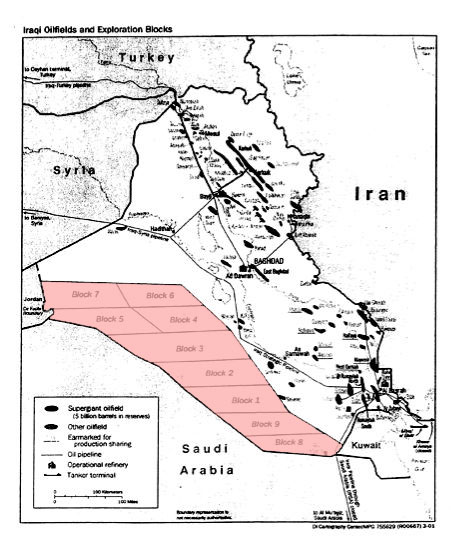
  1. every shred of paper from the Cheney Energy Task Force in early 2000. One of the few documents that was released in response to a FOIA request was a map of Iraq's oil fields divided up and a list of foreign suitors for those fields. What role did this play not only in our Wars in Iraq and Afghanistan, but seeking bases and political machinations in Central Asia, where we are trying to wrestle the Caspian pipeline business away from Russia. Did they do this solely for the benefit of oil and energy companies, or out of a misguided sense of seeking energy security? Were there dissenting voices in the military and foreign policy establishment that said this would make a LESS secure world since Russia and China might not like us having that degree of hegemony?

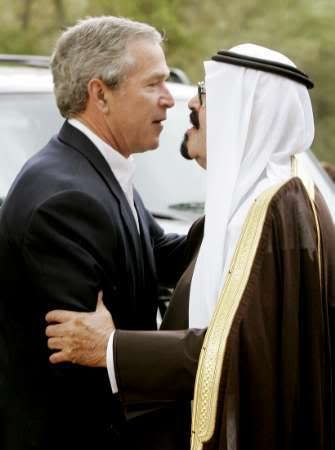
  2. The Saudi pages Bush classified in a panic in the Joint Congressional Inquiry into 9/11 Report. It is already a matter of public record that we were attacked by terrorists given logistical help by an agent of our ally Saudi Arabia, who also funneled money to the terrorist and was in constant phone contact with their embassy and consulate before the attack. The piece that is missing is why they would do that and why the Bush administration didn't even skip a heartbeat before defending and embracing them.

  3. Likewise, why did our government initially ignore the documented financial help and direction Pakistan gave to al Qaeda and the Taliban, including evacuating key leaders from Tora Bora? In the last couple of years, they seem to be noticing, though the most damning evidence was available immediately after 9/11. What was the reason for the selective outrage? or more importantly, why the long delay before the outrage? What other issues did we have with Pakistan then and now that would explain it?

    OK, I lied. A fourth I'd like to see:

  4. Has the Pentagon done an assessment of the security threat Wall Street's shorting of other countries economies and/or how the gutting of our industrial base have created? Are they monitoring the threat and have they prepared contingency plans to neutralize it?
There's probably a whole lot that could be asked on the domestic front as well, but I'm curious to hear what other's want leaked.


Saturday, September 12, 2009

Rolling Stones' Matt Taibbi's 9/11 truth smears

As I was rushing to get ready for work the other day, I caught a snippet of an interview of Matt Taibbi of Rolling Stone on Pacifica Radio. He was slamming 9/11 truthers for their theories about controlled demolition, how they discount scores of witnesses for the official version of the story, but embraces the individuals, however few, who back them up, and said he trusted the debunking 9/11 truther websites by Popular Mechanics and 9/11 myths. That was irksome because as usual the debunkers focus on the few issues that sound wackiest and sidestep those too big to sweep under the carpet.

But what was more irritating was his analysis of WHY any 9/11 conspiracy was unlikely:

  • 9/11 truthers are racists who don't think Arabs or Muslims are smart enough to plan and carry out an attack like 9/11.

  • Such a conspiracy would require too many people to keep their mouths shut--someone would have spilled the beans by now.
  • Washington doesn't need a "New Pearl Harbor" to justify war. The American people are so sheepish, they would go along with any war, and even if they did protest, it would have no effect--like the Vietnam War protests had no effect.
  • The powerful people on Wall Street are lazy golfers who just think about bribing politicians to change the rules to make it easier to make money.

The last is most annoying since Taibbi just wrote a long piece on how Goldman Sachs has been behind every bubble since the Great Depression, but let's look at these in order:

  • 9/11 truthers are racists
That's ironic. I had a very un-racist reason wonder if the attacks were solely the work of crazed fundamentalists. Most human beings of any race or religion don't engage in behavior that doesn't have some hope of a positive outcome. What possible positive outcome could have resulted for al Qaeda or Muslims anywhere from 9/11? Anyone familiar with our foreign policy would have more or less predicted what we did: kill a lot of Muslims and/or Arabs who had nothing to do with the attacks. It seems that those who believe the official story think Muslims are too stupid to understand cause and effect.

Those who back the official explanation of 9/11 have often bought into profoundly racist excuses for continuing the war in Iraq: can the Iraqis defend and police themselves if we pullout or will there be chaos? Are they "ready" for democracy?

That was a discussion that could be heard ad nauseum on network and cable news talk shows, and makes them sound less like people and more like cavemen who have only recently descended from the trees, developed the power of speech, and shed their vestigial tail.
  • Too many people to keep a secret
Taibbi probably heard of the Manhattan Project to develop the atom bomb. Thousands of people worked on the project, but only a few knew what the whole project was about, and the general public didn't hear about it until we dropped the bomb. It's easy to see this being the case if 9/11 was more a matter of prodding some crazies here, and impeding some investigations there. And we did have whistleblowers come forward to say their significant warnings were ignored from FBI field officers like Colleen Rowley to White House terrorism czar Richard Clarke.

More significantly, what happened to those who did come forward either with information or to ask sharp questions were often reviled in the press or hounded out of their jobs. Congresswoman Cynthia McKinney asked the right questions about our how any war games going on that day might have interfered with our air defenses that day and Don Rumsfeld refused to answer or provide the documentation she asked for. She was ridiculed in the press, not supported by the Democratic Party, and ultimately hounded from office and her party. The right wing media was less successful but just as vicious in attacking Richard Clarke and the Jersey Girls, a group of 9/11 widows who pressed for a 9/11 Commission. The right was successful in purging anchor Dan Rather from CBS, not for questioning 9/11 but for the lesser matter of Bush's own questionable record of military service. When Joe Wilson blew the whistle on one of the lies that led to the Iraq War, his wife was outed as a CIA covert operative, and both were attacked in the press. This would send a clear message to anyone with information that contradicted the official explanation of 9/11: keep your mouth shut or suffer severe consequences.

The clock on when we should expect to see 9/11 whistleblowers come forward should really start when Bush left office and Obama was inaugurated, and if I had that kind of information, I would be watching very carefully to see how Obama dealt with other misdeeds of Bush to see whether the chances of action being taken would outweigh possible retaliation. So far, if I was one of those people, I wouldn't have seen enough to make it worth the risk.
  • Washington doesn't need a "New Pearl Harbor" to justify war.
This was true throughout the Cold War, but a funny thing happened after the collapse of the Soviet Union--for a while, Washington was embarrassed to claim that dirt-poor Third World countries were a security threat to the United States. So other excuses were trotted out.

Papa Bush suddenly noticed that his pal Manuel Noriega in Panama was dealing drugs. That military action was so quick, public reaction didn't have time to have an effect.

The first Gulf War was sold more honestly (at least at first) as being about control of the world's oil supply; we didn't want Saddam to have it (not said out loud was that was our job). When that proved too abstract for most Americans to grasp, they shifted away from geopolitics to comic book demonization--Saddam Hussein was the new Hitler. This worked so well that when Bush decided at the end of the war to leave Saddam Hussein in power, the public still believed the propaganda instead of the realpolitik explanation. It cost Papa Bush in the polls and ultimately cost his presidency. That's a lesson politicians would remember--if you start with a big lie stick with it.

Papa Bush tried another approach with Somalia and Clinton inherited and stuck with it--it was a humanitarian intervention. The problem was, when our troops were killed there, the public soured on the mission and Clinton pulled our troops out.

That actually happened as far back as Reagan with "peacekeepers" in Lebanon. Once the Marine barracks was hit by a suicide bomber, Reagan had to pull out because the public didn't think a "humanitarian intervention" was worth so many deaths.

When the humanitarian excuse was used again for our intervention in the Balkans, Clinton bent over backwards to avoid the possibility of American casualties, which insured public apathy about the project.

The lesson for the DC establishment the last couple of decades has not been to ignore public opinion about going to war. They can only afford to do that if the war is quick like Grenada, Panama, or there were relatively few to no casualties as in the Balkans.

If they were going to start a prolonged war that will incur casualties along the way, they know they need a big excuse that has some staying power. Saddam's imaginary weapons of mass destruction and even more imaginary will to commit suicide by using them against the United States, who could retaliate hundreds of times over and burn Iraq off the map with our thousands of nukes, would have been a harder sell without the smoldering rubble of the World Trade Center in the back of the public's mind.
  • The lazy elite
This is true, but not in a way that excuses exonerates them from advocating and profiting from extreme acts of violence against innocent civilians.

Steven Kinzer of the New York Times wrote about how this plays out in foreign policy in his book Overthrow about the various coups and military interventions the US has sponsored to overthrow governments that weren't sufficiently compliant to American business interests. The most obvious example was Iran's secular, democratically elected president was ousted in a US backed coup because he wanted to keep more of the oil profits in Iran instead of giving them away to foreign big oil companies. He was replaced with a dictator, the Shah of Iran.

The same happened with the elected president of Guatamala, Jacobo Arbenz when he tried to enact land reform that enraged the United Fruit Company that considers Central America their private plantation. He was ousted in a US backed military coup.

It happened again when Chile elected a president a bit too socialist for the tastes (and profits of the American elite). Salvador Allende was replaced with the bloody dictator Augusto Pinochet.

In the current Iraq War, apart from the no bid contracts Bush gave to GOP cronies like Halliburton, KBR, and Blackwater (now Xe), the business-first motive is most obvious in the decrees of Bush-appointed governor of Iraq Paul Bremer that privatized and allowed foreign ownership of Iraq government assets, and in the first draft of the Iraq Hydrocarbon Law, written by an American company hired by George W. Bush, which gave 88% of Iraq's oil income to foreign oil companies, a deal none of Iraq's oil rich neighbors would accept without a gun to their heads. Remarkably, though the Iraqi cabinet approved the law, the parliament continues to refuse to pass it, and American oil companies keep lowballing bids on Iraqi contracts, thinking the presence of our troops is going to force the Iraqis to take otherwise unacceptable terms.

And this is why Taibbi is right about the financial elite being lazy, country club lounging golfers, but wrong about the consequences. It would be far more work to negotiate creatively to make a profit from governments protecting their own people's interest than it is to simply pick up the phone and ask those politicians, that Taibbi acknowledges are bought, to incite a coup or even go to war.

The work of diplomats and CIA agents to undermine and even oust foreign governments, or the military to invade countries cost the sociopathic trust fund babies of Wall Street nothing in time or money (apart from the required campaign contributions and later jobs for bought pols when they leave office). It is the ultimate in socializing cost and privatizing profits.

And it is like an addictive drug. Why bother to negotiate creatively, when you can step away from the table, let someone kill the leader or country you were negotiating with, and you can simply come back later and pick up what you want without opposition?

The Wall Street types would not necessarily even have to ask for a 9/11 to get it.

It is not hard to imagine the oil execs who met with Cheney for his energy task force, telling Cheney to do what it takes to get Iraq's tens of trillions of dollars worth of oil reserves under their control, pipeline routes through Afghanistan, and possibly even control of Iran's oil, since that's about all it took in the past. They leave the details and the works to the public servants, and they come back later to pick up the pieces of the countries that were broken for them.

The kind of scheming that Taibbi described in his article on Goldman Sachs would require more work and planning on the part of Wall Street suits than ordering up a war or coup.

Government and the Wall Street interests have likewise shown no hesitation to harm Americans when it served some larger goal, as happened with above ground nuclear testing, MK-ULTRA drug and mind control experiments conducted on our troops and college students, allowing cocaine into the US as part of the Iran Contra deal, and setting up a health insurance system that makes more money when it denies care to its customers and lets them die.
What is most disturbing about Taibbi's dismissal of 9/11 truthers is that he sidestepped some legitimate issues like the failure to protect what should have been our most secure airspace for two hours and the Joint Congressional Inquiry into 9/11's finding evidence of Saudi government involvement in the attacks, which the Bush administration immediately swept under the rug and most in the press never mentioned again. An FBI document later shed light on the Saudi agent who picked up two of the hijackers at LAX when they arrived in the US, set them up in an apartment, and funneled money to them from the Saudi ambassador's wife until 9/11. The agent also made multiple calls to the Saudi embassy before and during their stay in the US.

Does it make me a nut if I wonder what the meaning of that finding is? We were attacked by an ally, did nothing to that ally in return, but used the attack as an excuse to launch two wars and curb civil liberties at home. That is not a theory but a matter of public record, but Taibbi and others in the press won't put those indisputable dots together because they don't want to be called crazy by the rich and powerful, stop being invited to the best parties, or most importantly, fired.


Sunday, March 15, 2009

Gov't reaction to Wall Street meltdown like ''punishment'' of Prescott Bush for hiding Nazi money

If an ordinary citizen gave aid and comfort to our arch-enemy in World War II, they would have at minimum expected to spend the rest of their lives in prison or more likely, ended up like the Rosenbergs, executed for helping the Soviets.

Prescott Bush's bank was managing assets of a Nazi financier, including a steel plant that made heavy use of concentration camp labor.
Far from being unaware of this, Bush mentioned it in correspondence and was concerned that his bank's ''interests be protected.'' The government found this activity troubling enough that they seized the banks assets under the Trading with the Enemy Act.

Bush's punishment for his involvement?

You would think he would have at least ended up like John Walker Lind, stripped naked, blind-folded, and held in solitary until the trial that put him in prison for life (or shortened his life).

Instead, the whole business was hushed up and he later won a Senate seat.

It seems that something similar is going on with Wall Street today. Can anyone doubt that Wall Street's concerted effort to get themselves deregulated, their Rube Goldberg maze of shell corporations and off-shore accounts, and intentional defrauding of ordinary investors, mortgage holders, and retirees has done more damage to our economy than Tim McVeigh, Osama bin Laden, and all the other terrorists to ever blow up anything in the US combined?

And in fact, the connection to terrorism is not just by analogy, but literal. To the degree that we face a legitimate terrorist threat, it is because business interests demand to be put ahead of human rights, democracy, and even the national security of the United States.

The foremost example of this is how we treated Russia after the collapse of the Soviet Union. Mikhail Gorbachev hoped to transition to a European-style social democracy, but the investor class and banks wanted a Russia that was easy to plunder of their natural resources and industry. The result was the standard of living and even life expectancy in Russia DROPPED after the fall of communism, and Putin succeeds partly because he is trying to reclaim their dignity by standing up to us. Oil companies interest in stripping Russia of their oil, gas, and pipeline income further antagonizes a Russia that we now no longer have an ideological beef with. In effect, for the sake of corporate profits, we are reigniting a Cold War with an enemy with thousands of nuclear weapons.

Worse, business is a direct cause of the terrorist attacks of 9/11 and the Bush administrations failure to bring a quick conclusion to the War on Terror. Those in the Islamic world do not hate us for our freedom, but because we take theirs away to ensure that our oil companies have compliant governments to deal with, from overthrowing the democratically elected secular government of Iran in the 1950s to backing the oppressive Saudi government for decades. Oddly, even though the Joint Congressional Inquiry into 9/11 found direct involvement of the Saudi government in the attacks nothing was done about it. Whether this was done because we didn't want to jeopardize business ties with Saudis or because the Saudis were doing the Bush administration a favor with the attack, neither is acceptable.

And yet, the punishment of the wealthy who endanger and loot us like this will be much like Prescott Bush's. The public will use our taxpayer dollars to clean up their mess, and they will continue to live lives of leisure and be free exercise their power as ''masters of the universe'' even though they are masters of nothing but moving our money into their pockets.

I have no problem with capitalism in theory, but in practice, we can no longer afford a financial elite that not only ignores the law, but buys our politicians and makes the indefensible legal.

Any solution to this current problem has to involve putting the fear of God or at least fear of the wrath of the American people into these spoiled sociopathic trust fund babies, the likes of which no financial elite has felt since the Russian or even French Revolution.

Anything less than that leaves America and the world at risk from more attacks by these economic terrorists who make 9/11 look like a toddler's temper tantrum.


Thursday, February 19, 2009

Our Afghan War for Pipeline & Poppy Fields

"There is only one thing in this world, and that is to keep acquiring money and more money, power and more power. All the rest is meaningless."

Napoleon Bonaparte
Former Senator Fritz Hollings wrote a piece for the Huffington Post asking why we are still in Afghanistan since our wars are producing more terrorists than they kill. He started off well, but sidestepped the geopolitic grown up talk that America never had about why we killed a million Iraqis and why we are still in Afghanistan.

It certainly has nothing to do with threats to our security. If that was the case, we would have invaded North Korea after they fired missiles over Japan.

And it has nothing to do with 9/11 since al Qaeda was financed and given logistical support by Saudi Arabia and Pakistan, the latter going as far as evacuating top al Qaeda leaders from Tora Bora when we had them cornered there.

If we didn't go after those two nations, it's hard to believe that having our troops in Afghanistan has anything to do with 9/11.

Instead, it is more likely we are in Afghanistan because someone thinks they can make a lot of money there, from the Trans Afghanistan Pipeline and so Wall Street can continue to collect the income from the Heroin poppies, just as the British did when they tried to force Afghan opium on the Chinese way back in the Opium War, and just as Bush was trying to force oil laws favorable to oil companies on Iraq, so they could collect up to 88% of the income from Iraq's tens of trillion of dollars worth of oil.

Energy companies courted the Taliban for a pipeline from Turkmenistan through Afghanistan and Pakistan to take natural gas to India but gave up in frustration shortly before 9/11. In 2006, India was concerned about continuing the project until America gave assurances that we would protect the pipeline.

UPDATE: Those assurances were repeated in 2008.
(Thanks to
chill_wind at DU, who provided another good background link on pipeline)

The drug story is even less well-known, though the New York Times did cover the story of the Afghan president's brother being one of the largest drug smugglers in the country.

When Britain controlled Afghanistan, they owned the poppy trade. When the French owned Indochina, they owned the poppy trade there. Once we allied with the fundamentalists in Afghanistan in the 80's, drugs started flowing out of there, through Pakistan, and to the US. Do you suppose our leaders and business people are so pure they aren't getting a cut of that?

Wall Street has a bad habit of covering up their incompetence as businessmen with drug money.
The BCCI money laundering scandal involved some of the wealthiest and most powerful people in the country, profiting from drug trafficking and handling money for terrorists. The New York Times and even PBS has even covered this drug money laundering business, and if you googled the name of your favorite big bank, you would more likely than not find they have been involved.

UPDATE: UN says drug money keeping banks afloat in financial crisis.
(Thanks to RubyGal at DailyKos for link)

John Kerry has documented CIA drug dealing, confirming the work of San Jose Mercury News Reporter, Gary Webb's uncovering of the Contras selling cocaine that flooded America's inner cities. The CIA itself has an odd history of picking a fair number of directors who came not from the intelligence community but from Wall Street or corporations. Like corporate lawyer John Foster Dulles or oil man George HW Bush. So it would make sense that the agency is looking after business more than our security.

It is about money. I appreciate Hollings asking the question, but he should have provided part of the real answer too.

And I guess it would be too much to ask that our new president set aside the propaganda bullshit about our various military operations, tell us who profits from them, and what if anything the average American gets out of them, so we could make an informed decision about whether to support killing people in dirt huts with our troops and our tax dollars, and nineteen and twenty year old American kids coming home in aluminum coffins.

UPDATES:

confirmation in Toronto Star

Iran out-manuevers US on pipeline through Pakistan

November 2009 updates:

Recently, Ron Reagan had a former CIA agent on his show who said the CIA controls 90% of the heroin trade.

A couple of respectable investigative reporters have followed up on this, Chris Hedges and David Lindorff.


Friday, January 30, 2009

Prosecuting Bush administration not politics, but matter of national security

After ignoring the grassroots movement to impeach Bush, which had twice as much support as impeaching Clinton and about as much as impeaching Nixon the night before he resigned, the mainstream media is now pooh-poohing the idea of prosecuting Bush administration officials for their domestic and war crimes.
If restoring Constitutional checks and balances and showing that the rich and powerful aren't above the law, especially laws of basic human decency like the Geneva Convention, isn't reason enough, there are some very immediate national security reasons to do so, related to 9/11 and the Iraq War.

In the case of 9/11, that day George W. Bush said,
I have directed the full resources of our intelligence and law enforcement communities to find those responsible and to bring them to justice. We will make no distinction between the terrorists who committed these acts and those who harbor them.

The Joint Congressional Inquiry into 9/11 found that the Saudi government helped the hijackers, and declassified FBI documents show a Saudi agent picked up two of the hijackers at LAX, set them up in an apartment in his own building, and funneled checks to them from the Saudi ambassador's wife.

Did the Bush administration use this information to punish Saudi Arabia or change the nature of our relationship with them in any way?

No.


He even protected them by classifying the Saudi pages of the Joint Congressional Inquiry's report and tried to smooth over uproar caused by the sketchy details that did leak out.

He likewise said little to nothing about Saudi terrorists entering Iraq even though more came from there than any other country according to Israel, our Pentagon, and even the Saudis themselves.

Why didn't Bush do anything about this? Even if you don't believe the Bush administration was involved in 9/11, covering up the Saudi role is at least a bigger crime than Richard Nixon covering up a second rate burglary.

Worse, it means that we may be vulnerable to another terrorist attack because for all the Patriot Act bluster and trampling of our civil rights, the Bush administration did nothing punish or restrain the real perpetrators.

There is a similar issue with how we became involved in the Iraq War. What was once considered a conspiracy theory, that the Bush administration intentionally lied to get us into the war, is more or less accepted as fact by the mainstream media now.

However, if we don't prosecute those responsible, they are free to return to government at a later date, and do the same thing. That is exactly what Cheney and Rumsfeld did after lying about the nature of the Soviet threat in the 70s.

While the lies and liars from within the administration are pretty well documented, their helpers outside the administration, like those who forged the Niger document claiming that Saddam had tried to buy yellowcake, have not been outed and put out of business.

Perhaps most importantly, we have not had a public airing of WHY Bush bothered to trump up a war against Iraq and who it was meant to benefit. There are some clear clues like Cheney's secrecy about the energy task force he led that was pouring over maps Iraq's oilfields, and the Bush commissioned Hydrocarbon Law that would have given 88% of Iraq's oil income to foreign oil companies, a law that Iraqi legislators refused to pass even after being offered millions in bribes each by the oil companies. But those are just clues.

Without a definitive record of who lobbied for the war, who listened to them, and how they got their way, we are vulnerable to being misled into a war again in the future. If those who planned to profit from the war were punished, we would be even less likely to see it happen again.

It is a matter of public record that Bush diverted our attention from those responsible for 9/11 and fabricated a case for war, leaving us vulnerable to terrorist attacks from those he protected and squandering military resources we should have saved for real threats.

We are less safe because of it, and without the complete investigation and prosecution of those responsible, we will continue to be at risk.

If it does not happen, it would be because our government is looking after the interests of the very wealthy at the expense of the rest of us.


Friday, November 07, 2008

Questions Obama must ask intel briefers to separate bullshit from reality

Ray McGovern, former CIA analyst and presidential briefer posted some question he thought Obama should ask his intel briefers. This inspired me to come up with a list of question of my own, designed to separate the embarrassing, childish propaganda of the Bush administration from our real foreign policy goals and challenges, and send this email to McGovern:
I just read your article and had a couple of things that I would want the next president to know as well:
  • How much of what we are doing in Central Asia is motivated by the "War on Terror" and how much is jockeying for control of the world's remaining oil reserves?
  • To the extent that we are trying to monopolize the oil in the Persian Gulf and Caspian Sea Basin, how much of that is for our national security and how much is strictly for the benefit of oil companies?
  • How could Russia potentially retaliate for our efforts to take over the export routes from the Caspian Basin? Would it hurt our national security to leave that to the Russians in exchange for their traditional posture of leaving us the Persian Gulf?
  • If we were Russia or China, how would we respond to the United States trying to take control of the two major oil producing regions in the world? Why should we expect Russia or China to respond differently than we would in that position?
  • Which business interests are using our foreign policy apparatus to enrich themselves while enflaming animosity in other countries toward the United States? What would our foreign policy look like and how much would we save if we didn't use our military and diplomats as their enforcers? How can we disentangle those business interests from our government and neuter their influence?
  • What do we gain by leaving the Israel-Palestine conflict an open wound? Are we just the victims of the best lobbying effort ever, or are we getting something out of it like using Israel as the bad cop and possible having them as a scapegoat when things finally fall apart in the Persian Gulf?
  • If a bipolar Cold War produced relative stability for decades, why can't we have a stable multi-polar peace, that gave us, Russia, China, and Europe spheres of influence?
  • For you generals and intelligence analysts old enough to have lived through the Cold War, can you tell me with a straight face that Iran or any other country would be stupid enough to use nukes on us or give them to terrorists who might when we have 10,000 warheads to retaliate with and are the only country who has demonstrated the willingness to use them?
  • The same question on a smaller scale applies to Israel: how exactly would a nuclear armed Iran be a threat to Israel when Israel has several hundred nukes to respond with, a handful of which could take out all the major cities in Iran?
  • What was in those classified pages about Saudi Arabia in the Joint Congressional Inquiry into 9/11's report? Even without those pages being released, there is far more evidence of Saudi government involvement in 9/11 than either of the two countries we invaded, Iraq and Afghanistan. Why did the Bush administration let them off the hook?
  • What are the various "off the books" covert activities involving American business and government operatives, whose interests do they serve, and how can we keep them from creating incidents to steer our foreign policy?
The frustration I have with all of these questions is that these are not part of the public debate, and instead we hear our elected leaders talk in childish terms of chasing terrorists, WMD (wasn't the old NBC acronym more precise and less alarmist?), or spreading democracy. We ignore each of those three things when it suits our perceived interests. We don't care about Saudi terrorists or their lack of democracy, and we clearly don't care about nukes in Pakistan, India, or Israel. So other interests are in play that aren't in the debate.

I guess American politicians keep doing it because it works on the American public, but it makes us, and even the politicians themselves, look retarded in the eyes of the rest of the world.

Sincerely,


I'm embarrassed to say I forgot to send Ray a pretty big one:


Sunday, October 26, 2008

Meaning of US troops attack in Syria

Bush is still president, and still trying to spread his war from Iraq to neighboring Syria. The excuse is that insurgents are coming from Syria into Iraq. Even if true, that does not necessarily mean Syria is trying to jam us up--millions of refugees who fled Iraq ended up in Syria, so it's not surprising that some go back with violent intentions. The Syrian government had actually HELPED Bush earlier on in "War on Terror" by letting Bush send prisoners to Syria to be tortured. That stopped when Bush started talking about invading Syria too.

Oddly, Bush never seems to pursue foreign fighters and insurgents into Saudi Arabia even though Israeli, Saudi, and even Pentagon studies say more foreign fighters come into Iraq from Saudi than any other country. And Congress found that it was not Iraq, Iran, or Syria whose intelligence agencies helped the 9/11 hijackers but Saudi. It makes you wonder if terrorism is the excuse not the cause of the war, and the Saudis are helpfully providing the excuse when needed, and dialing it down when it's not (like during and after the surge).

As this attack on Syria shows, we are still in the ironic position of relying on "rogue nations" like Syria and Iran acting with more restraint and foresight than Bush to prevent a wider or even world war.

We had an uneasy peace for decades with two world superpowers with opposing ideologies. Now that Russia and China are capitalist (if not entirely democratic) how hard could it be to come up with a new balance of power arrangement that could preserve the peace even longer than the Cold War?

I guess we won't know until Bush is out of office. If he succeeds in inciting another war or McCain follows him in office, we may never know.

KEY EXCERPTS:


26 October 2008

'US troops' strike inside Syria

"American soldiers" emerged from helicopters and "attacked a civilian building under construction and opened fire on workers inside - including the wife of the building guard - leading to [the deaths] of eight civilians", it added.

"The helicopters then left Syrian territory towards Iraqi territory," Sana said.

The dead include a man, his four children and a married couple, the Syrian report said, without giving details of the children's ages.

****

The area is near the Iraqi border city of Qaim, a major crossing point for fighters, weapons and money travelling into Iraq to fuel the Sunni insurgency.

FULL TEXT


Sunday, June 01, 2008

McClellan tells one last lie for Bush: Iraq War for Democracy


Although Scott McClellan's book is unflattering toward the Bush administration in general and Bush in particular, he does Bush a gigantic favor by still telling a crucial lie: that the Iraq War was at least in part to spread democracy in the Middle East.

This would make Bush at worst an impractical idealist.

In reality, his actions and those of his administration show he had no intentions of spreading democracy to the Middle East--or even to Iraq.

As little as 1% of Iraqis feel safer because we are there and overwhelming majorities want us to leave.

But Bush stays.

He did eventually have elections in Iraq, but not until after his appointed colonial ruler, Paul Bremer privatized their economy and made other sweeping changes that the Iraqis are not allowed to tamper with.

When the Iraqi parliament chose a prime minister Bush didn't like, he told them to pick again.

When Iraqis wouldn't pass an oil law that gives up to 88% of their oil wealth to American big oil companies, Bush threatened to fire their prime minister if it didn't pass. Since that didn't do the trick, the oil companies offered each legislator up to $5 million to pass the law, they refused, choosing to represent the will of their people, but I don't remember reading about Bush protesting that attempt at corrupting their fledgling democracy.

Bush also continues to blame Iran and Syria for the violence in Iraq, ignoring statements from Iraq's prime minister to the contrary.

Bush has made even less effort to act on his democratic statements elsewhere in the Middle East.

He supported democracy in Lebanon and the occupied territories of Palestine, but only until he didn't like the outcome--it isn't democracy if the government doesn't obey Bush.

Before the Iraq War, when bribes wouldn't work on our democratic ally Turkey, neocon gargoyle Paul Wolfowitz said the military should have played a "strong leadership role" to make them join us. This not only offended the Turkish legislature, it offended the Turkish military, who had more respect for democracy than the Bushie Wolfowitz. In fairness, Wolfowitz showed a similar disregard for American democracy when he admitted on two separate occasion that the Iraq War was about oil and the talk of WMD was for "bureaucratic reasons." The only reason to lie was to keep the public from making a knowledgeable decision, which castrates democracy.

It's an understandable mistake on the Bushies part given how cozy they are with Pakistan's military dictator, Pervez Musharaf, who overthrew his country's democratically-elected civilian government. The Bushies didn't mind his cozy relationship with the Taliban and al Qaeda either. He helped both escape from Tora Bora, and Pakistani intelligence helped Daniel Pearl make his appointment with the terrorists who eventually beheaded him. One of the kidnappers' demands was for the delivery of several F-16 fighter jets bought by Pakistan from the US. That sounds like someone trying to do Musharaf a favor, rather than undermine him.

Bush's closest ally in the region Saudi Arabia, doesn't even make a pretense of democracy. It is a kingdom with no freedom of speech, assembly, or elected government. It also supported the 9/11 hijackers and sends more foreign fighters into Iraq than any other country. None of which seems to bother Bush.

In all, Bush's lies about spreading democracy should be considered as discredited as thoroughly as the ones about Saddam having WMD and planning to give them to bin Laden.

The press and Democrats in Congress fail to knock down this last lie because it might make citizens finally demand a discussion of the real reason for the war, control of tens of trillions of dollars worth of Iraq's oil, not for the good of the average American, but to pad the bottom lines of a handful of corporations, by letting them control the flow to set the price HIGH.

OIL THEFT MOTIVE FOR IRAQ WAR RESOURCES